Deep Drawing Hydraulic Press: A Buyer's Checklist
Tonnage, frame, die cushion, stroke, speed and safety - the eight points to check before you buy a hydraulic press for deep drawing.
In this article
Deep drawing turns a flat sheet blank into a cup, shell, housing or tank by pulling the metal into a die with a punch. It is used for kitchenware, cylinders, filter housings, auto parts and many other components. Because the metal has to flow without tearing or wrinkling, the press matters as much as the die. Use this checklist when you buy a deep drawing hydraulic press.
Why a hydraulic press suits deep drawing
- Full force over the whole stroke: drawing needs force all the way down, not only at the bottom.
- Controlled speed: the drawing speed can be slowed so the metal flows evenly.
- Long, adjustable stroke: deep parts need a long stroke and enough daylight.
- Pressure hold: the ram can dwell when needed.
Read more in our comparison of hydraulic press vs power press.
Buyer's checklist for a deep drawing hydraulic press
1. Tonnage
Drawing force depends on the blank size, the material and its thickness and strength. Add the blank-holder force and a safety margin. Our engineers can calculate it from your part drawing — see also how to choose press tonnage.
2. Frame
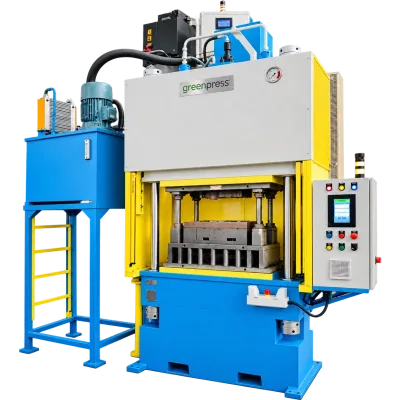
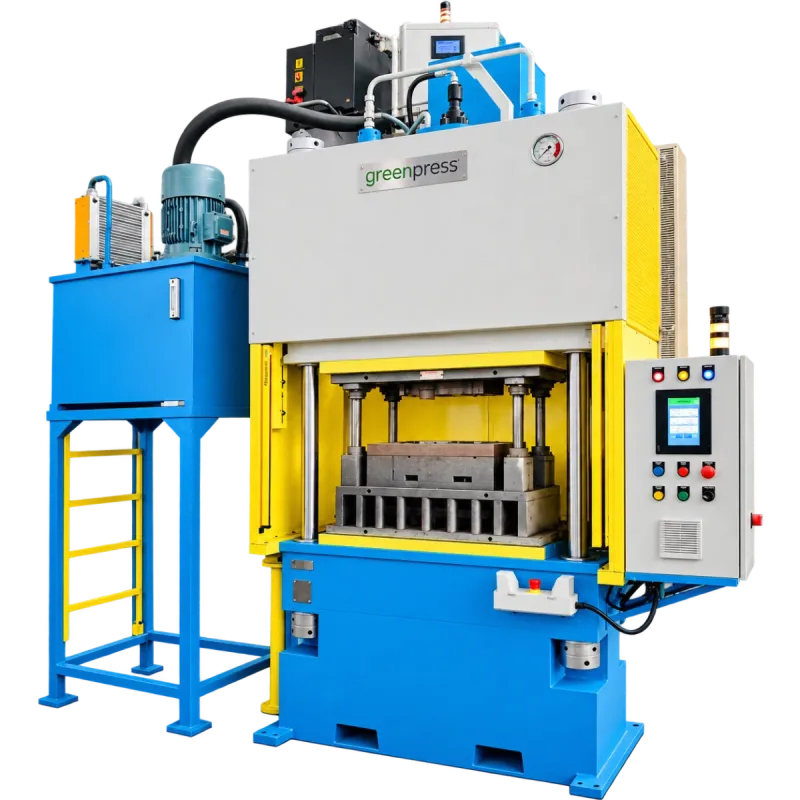
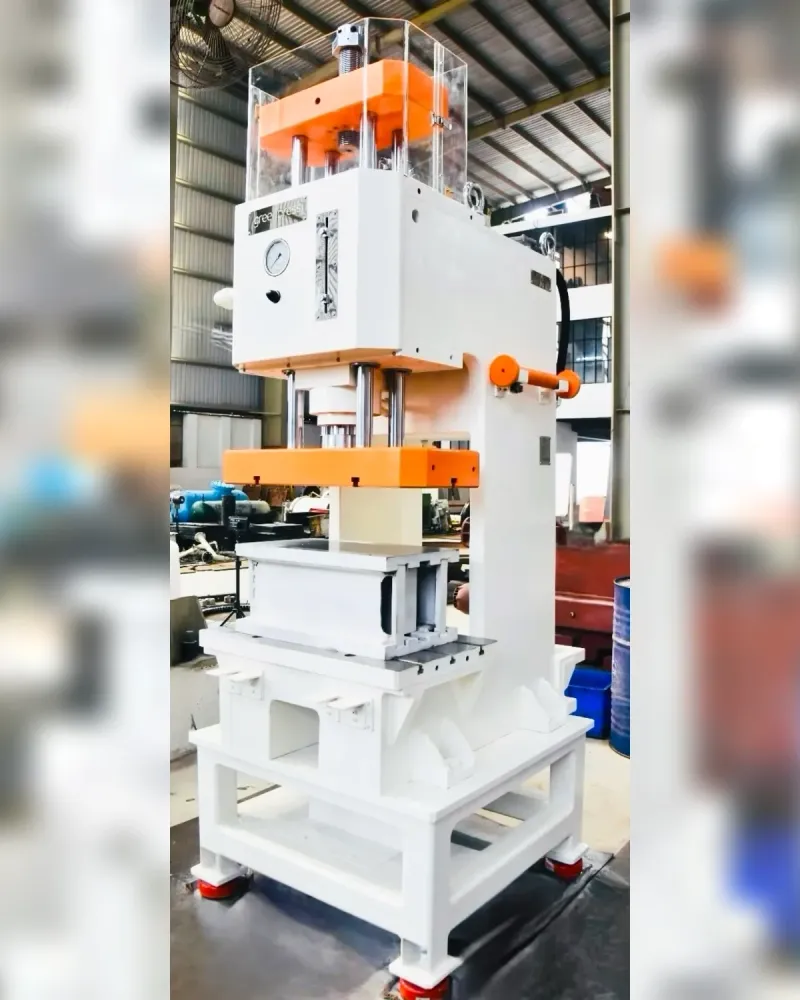
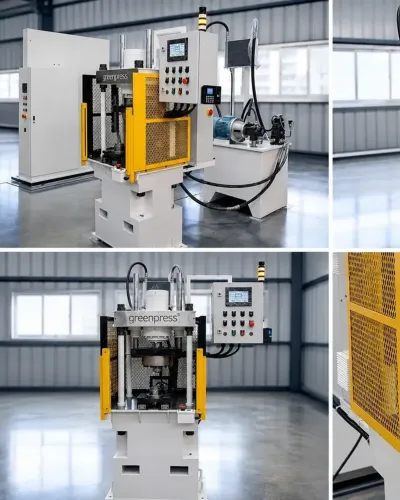
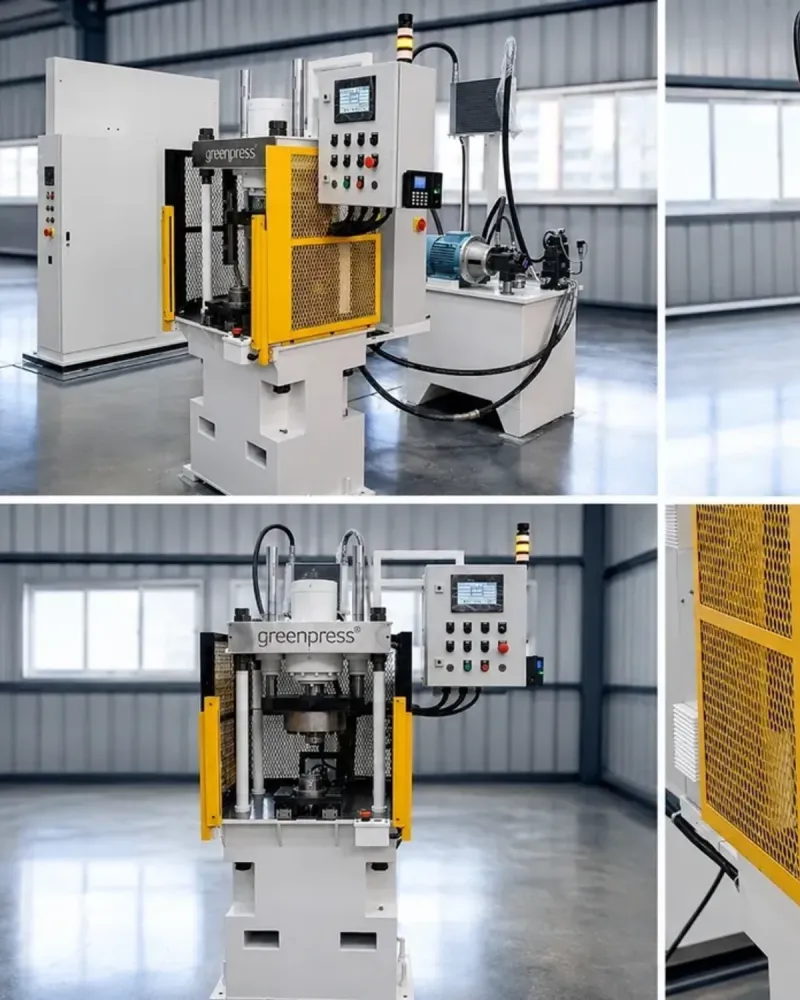
A 4-pillar frame is usually preferred for deep drawing because it keeps the slide parallel to the bed under load and carries larger dies. See C-type vs 4-pillar hydraulic press.
3. Die cushion / blank holder
A hydraulic die cushion (or a separate blank-holder cylinder) holds the blank edge with a controlled force. Too little force causes wrinkles; too much causes tearing. Ask whether the cushion force is adjustable and how it is controlled.
4. Stroke, daylight and bed size
Stroke must be more than the draw depth plus loading clearance. Daylight must fit the die height plus the part. The bed must fit the full die set.
5. Speed control
Look for a fast approach, a slower adjustable pressing speed and a fast return, so cycle time stays low without hurting part quality.
6. Ejection
Deep parts can stick in the die. A bottom ejector or the die cushion lifting the part out saves time and protects the part.
7. Controls and monitoring
A PLC with HMI, an LVDT for slide position and a digital pressure switch make it easy to repeat settings for each die and to spot problems early.
8. Safety
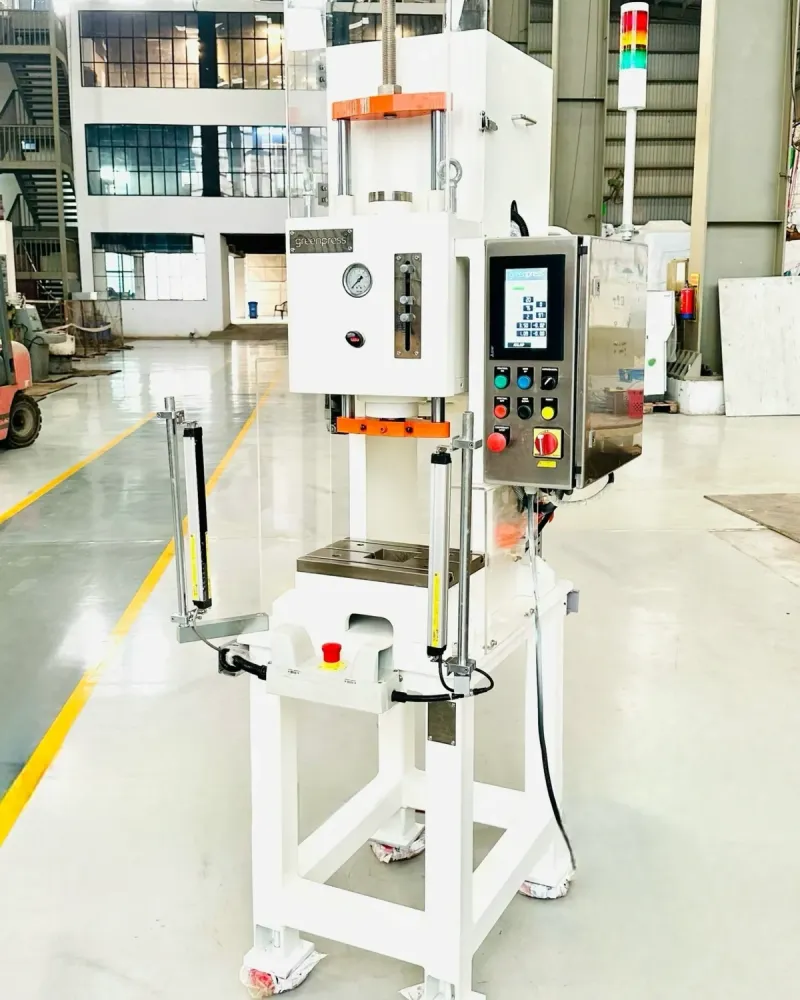
Light curtains, full guarding and two-hand controls protect operators and are expected by most OEM customers.
Get a deep drawing press from GreenPress®
GreenPress® builds 4-pillar hydraulic presses and custom hydraulic presses for drawing, forming and trimming. Share your part drawing, material and target output through the enquiry form or WhatsApp, and our engineers will suggest the right tonnage and press.