Hydraulic Press Price in India: 8 Things That Decide the Cost
Why two hydraulic presses of the same tonnage can cost very differently - and what to share with suppliers to get a quotation you can compare.
In this article
"What is the price of a hydraulic press?" is the first question most buyers ask — and the honest answer is that two presses with the same tonnage can differ a lot in cost. The price depends on what the machine has to do, how accurately, and how safely. This guide explains the eight things that decide the price of a hydraulic press in India, so you can compare quotations on a fair basis.
1. Tonnage (press force)
Tonnage is the biggest single factor. A higher-force press needs a bigger cylinder, a stronger frame, a larger pump and motor, and more steel. Buying far more tonnage than the job needs increases cost without adding value, while buying too little shortens tool and machine life. If you are not sure, read our guide on how to choose the right press tonnage, or share your part details and let our engineers calculate it.
2. Frame type: C-type or 4-pillar
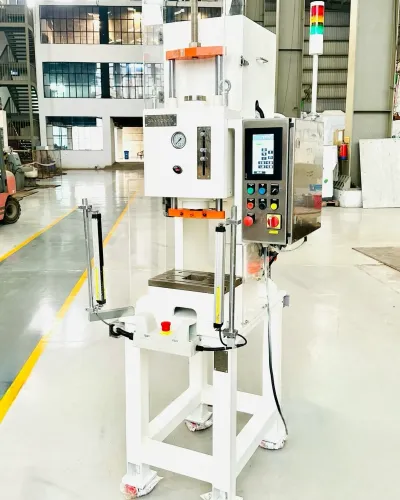
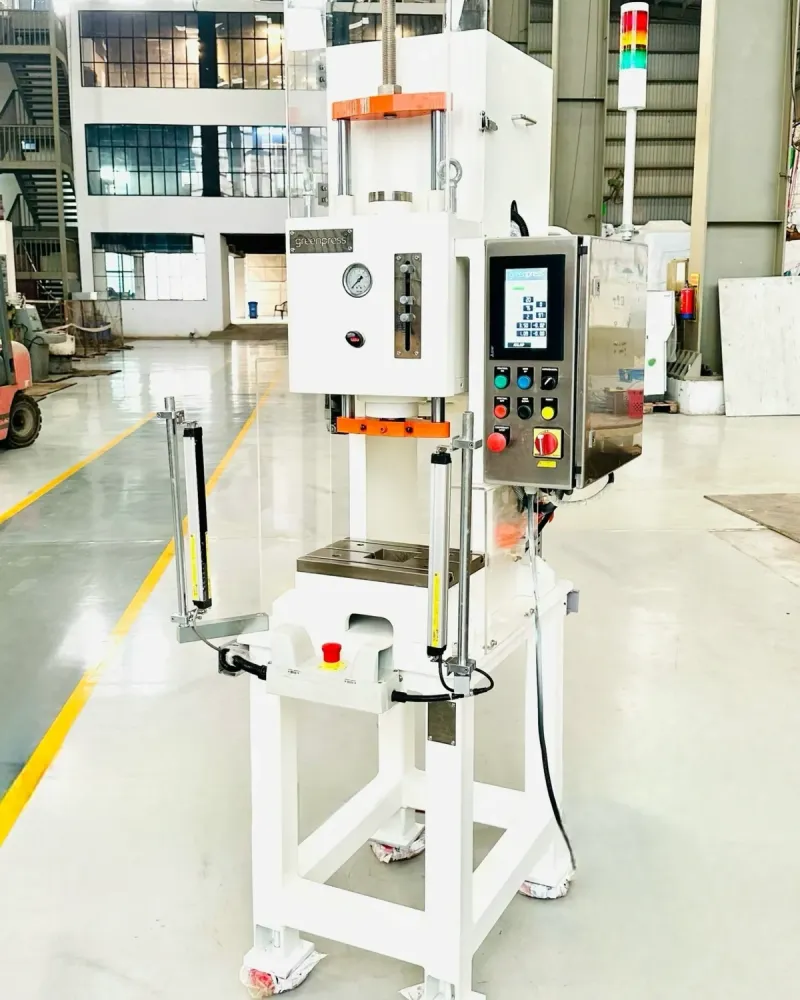
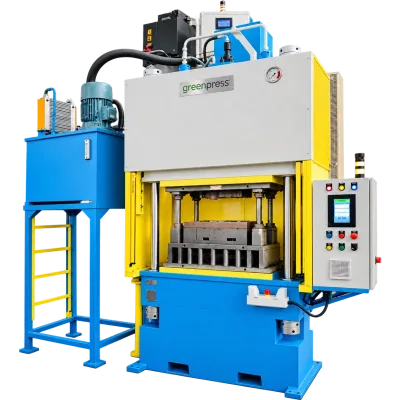
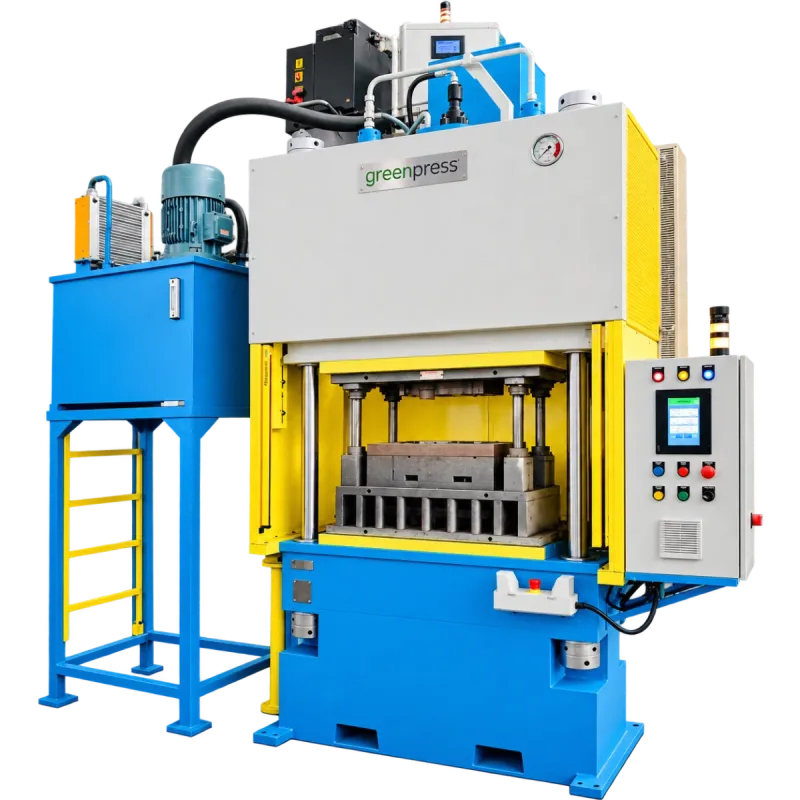
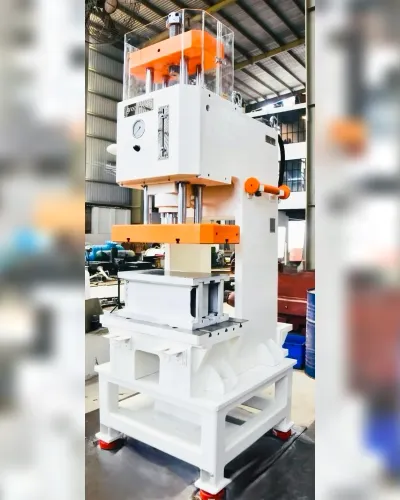
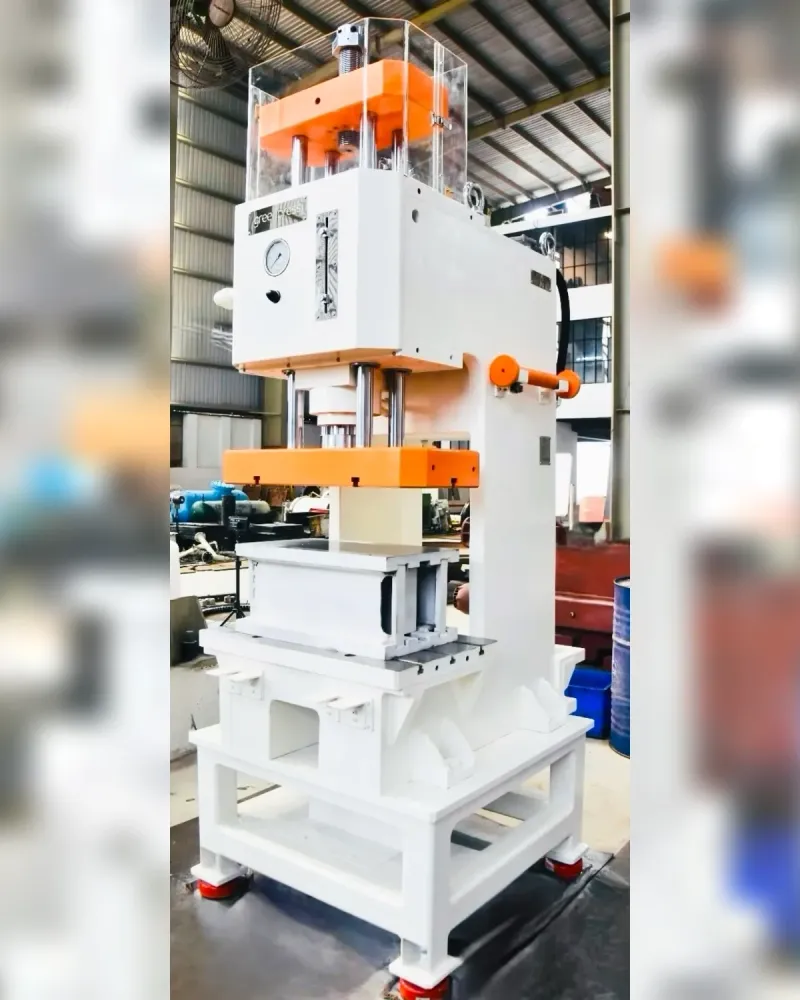
A C-type (open-front) hydraulic press gives easy access from three sides and suits small parts, assembly and press-fitting. A 4-pillar hydraulic press spreads the load evenly over a larger bed and suits forming, deep drawing and larger dies. The frame changes the amount of steel and machining, so it changes the price. See the difference in our C-type vs 4-pillar guide.
3. Bed size, daylight and stroke
The table (bed) size, the daylight (open height) and the stroke length decide which dies and parts fit. A bigger bed or a longer stroke means a bigger machine. Size these to your largest die and part, with some room for future jobs.
4. Speed and cycle time
Fast approach, controlled pressing and fast return speeds need a larger pump, better valves and sometimes a regenerative circuit. If you need high output per shift, tell your supplier your target cycle time so the hydraulic circuit is sized correctly.
5. Controls and accuracy
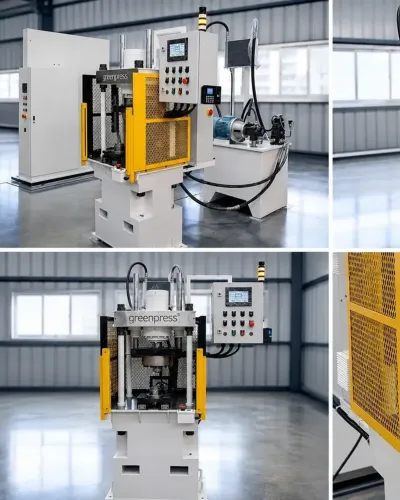
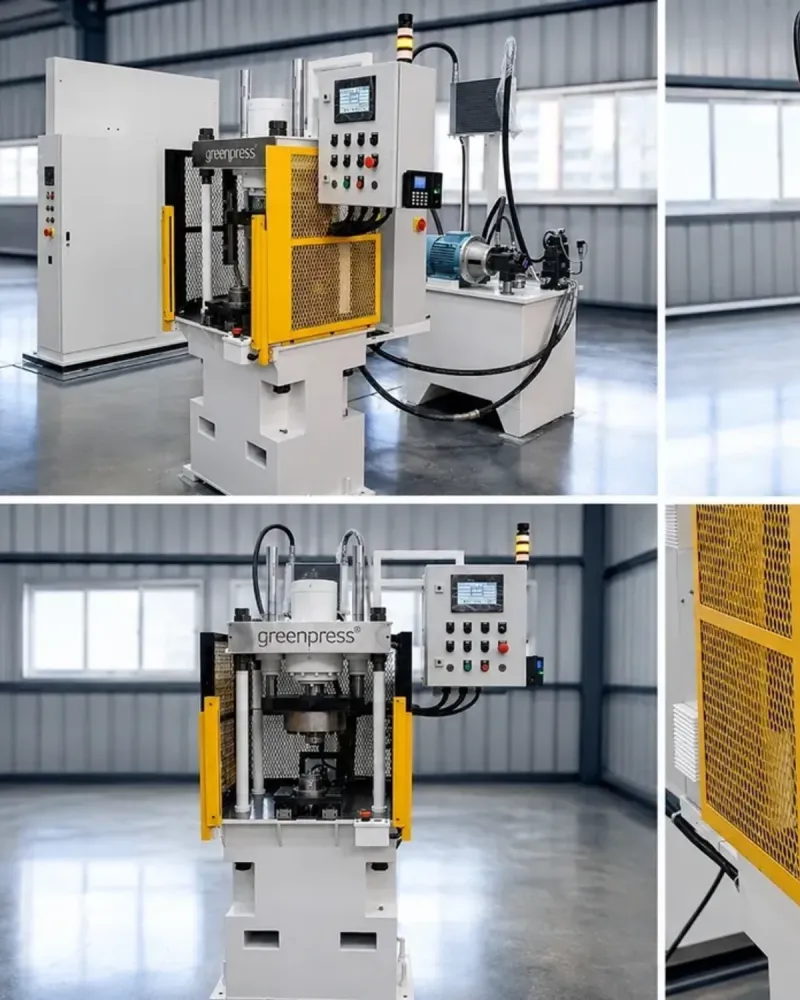
A basic press works with limit switches and a pressure gauge. Accuracy-critical jobs need more: a PLC with HMI, an LVDT displacement sensor for exact ram position, a digital pressure switch, or a force sensor / load monitor that checks every part. Each option adds cost, and each one reduces rejects.
6. Safety features
Safety light curtains, full enclosures, steel mesh guarding and two-hand controls protect operators and are often required by OEM customers and auditors. Always compare quotations with the same safety package — a cheaper press without guarding is not a like-for-like price.
7. Special functions and tooling
A moving (sliding) table, die cushion, ejector, heating platens for moulding, or a custom fixture all add to the price, but can save a lot of handling time. Tooling and fixtures are usually quoted separately.
8. Build quality and after-sales support
The quality of the cylinder, seals, pump and valves decides how long the press holds its accuracy and how often it leaks or stops. A nearby supplier who can send an engineer quickly is worth a lot when production is waiting.
How to get an accurate hydraulic press quotation
To get a quotation you can compare, share these details with every supplier:
- The job: forming, drawing, punching, press-fitting, moulding, etc.
- Material and thickness, and the part size (a drawing or photo helps)
- The tonnage you think you need, if you know it
- Bed size, stroke and daylight needed for your die
- Required output per hour or cycle time
- Controls and safety features your customer or plant expects
Faridabad-based GreenPress® builds C-type and 4-pillar hydraulic presses and custom machines. Send your requirement through the enquiry form or WhatsApp, and our engineers will suggest the right model and send you a price.